Thai Basil Pesto
There is a moment when you first smell fresh herbs that just feels like a reset button for the soul. If you have ever grown Thai basil in your garden—or accidentally bought a massive bunch at the market because the purple stems looked so pretty—you know exactly what I mean. It has this spicy, anise-like licorice scent that is completely intoxicating.
That is where this Thai basil pesto comes in. It is my absolute favorite way to capture that vibrant energy in a jar. Unlike traditional Genovese pesto, which can sometimes feel a bit heavy with cheese, this version is bright, zesty, and refreshing. It’s the kind of sauce that makes a simple bowl of rice noodles taste like culinary school quality takeout. Trust me, you are going to want to put this on everything.
This recipe relies on punchy ingredients to do the heavy lifting, so you don’t need a lot of them.
While your standard Genovese basil—the kind you’d tuck into a Caprese salad—is soft, floral, and delicate, Thai basil is a total powerhouse with a completely different personality. You can spot it immediately by its gorgeous purple stems and sturdy, pointed leaves that don’t wilt the second you look at them. Flavor-wise, it brings this incredible, spicy licorice or anise punch that actually holds its own against high heat and rich sauces.
Have you ever made pesto that turned into a sad, oily puree? We want to avoid that. The trick is to use the “Pulse” Method.
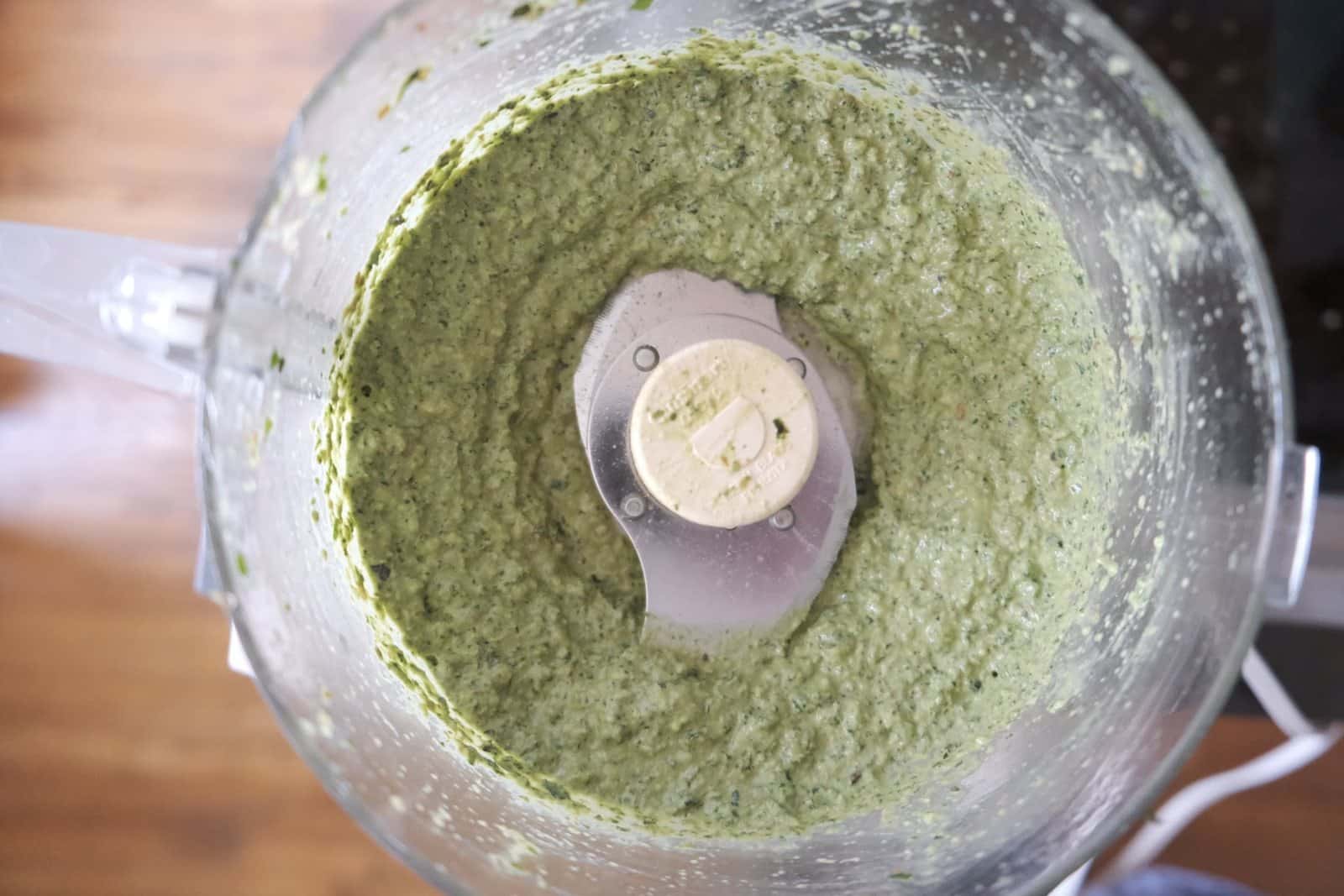
Instead of turning your food processor on and letting it run continuously, press the pulse button in short, sharp bursts. This chops the ingredients without pulverizing them into a paste. It creates a sauce with texture—little bits of crunchy peanut and flecks of green basil—rather than a baby food consistency. This technique preserves the integrity of the ingredients and keeps the colors bright and snapping.
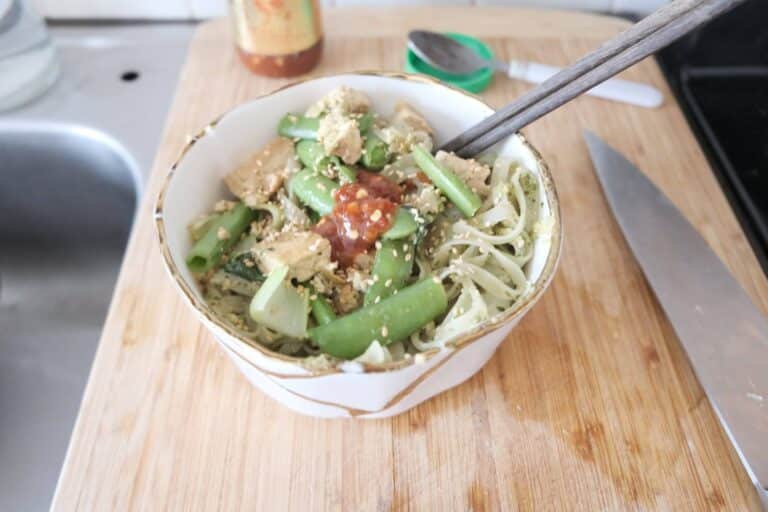
Eat this peso with dishes like our 15-minute spicy noodle bowls!
Serves 4
Ingredients
- 2 cups fresh Thai basil leaves (packed)
- ½ cup roasted (unsalted peanuts)
- 2 cloves garlic (peeled)
- 1 tbsp fresh ginger (chopped)
- 1 tbsp soy sauce (or tamari for gluten-free)
- 1 tbsp fish sauce (optional, but adds amazing depth)
- Juice of 1 lime (about 2 tbsp)
- 1 tsp honey or maple syrup
- 1 tsp sesame oil
- ⅓ cup neutral oil (canola, vegetable, or light olive oil)
- Optional: 1 small Thai chili for heat
Method
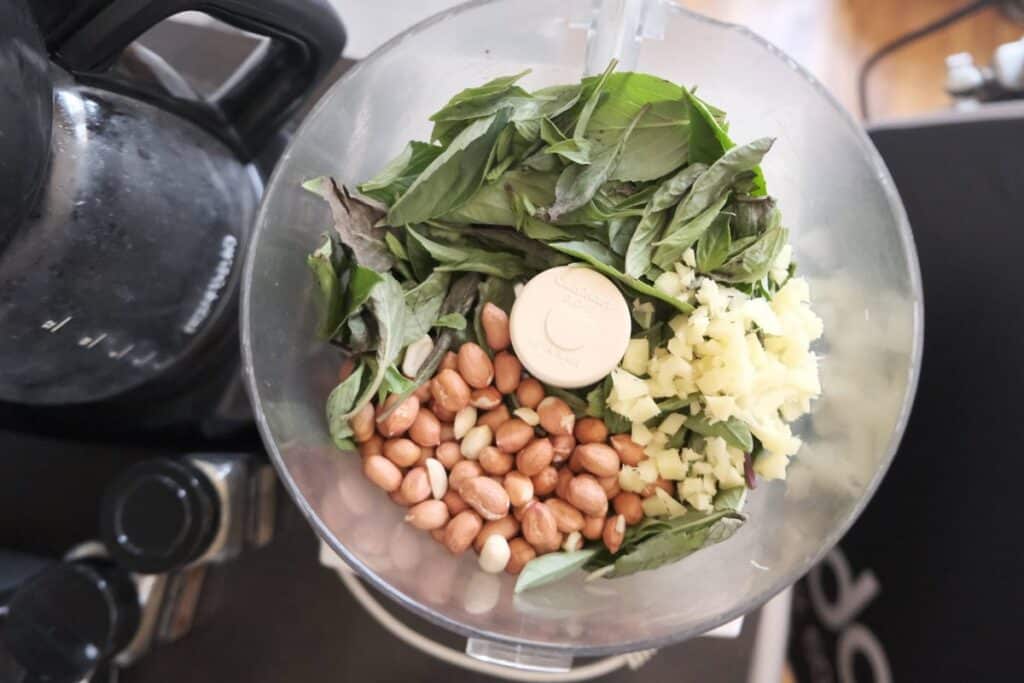
- Process Peanuts and Aromatics: Place the peanuts, garlic, and ginger into a food processor. Pulse the machine 5 to 7 times until the ingredients are coarsely chopped. The texture should resemble coarse breadcrumbs.
- Add Basil and Liquid Ingredients: Add the Thai basil leaves, soy sauce, fish sauce, lime juice, honey, sesame oil, and the chili (if using) to the processor bowl.
- Incorporate the Oil: With the processor running on low speed (or while pulsing steadily), slowly pour the neutral oil through the feed tube.
- Check Consistency: Stop the machine as soon as the mixture comes together. The pesto should be a thick, chunky sauce, not a completely smooth puree.
- Adjust Seasoning: Taste the pesto. If it requires more acidity, add a squeeze of lime juice. If it needs more saltiness, add a pinch of salt or a splash of soy sauce. If it needs a bit more acidity, add rice vinegar, a little at a time.
- Serve or Store: Use immediately with noodles or proteins, or transfer to an airtight container for storage.